PAU 2025
 Toca per ampliar
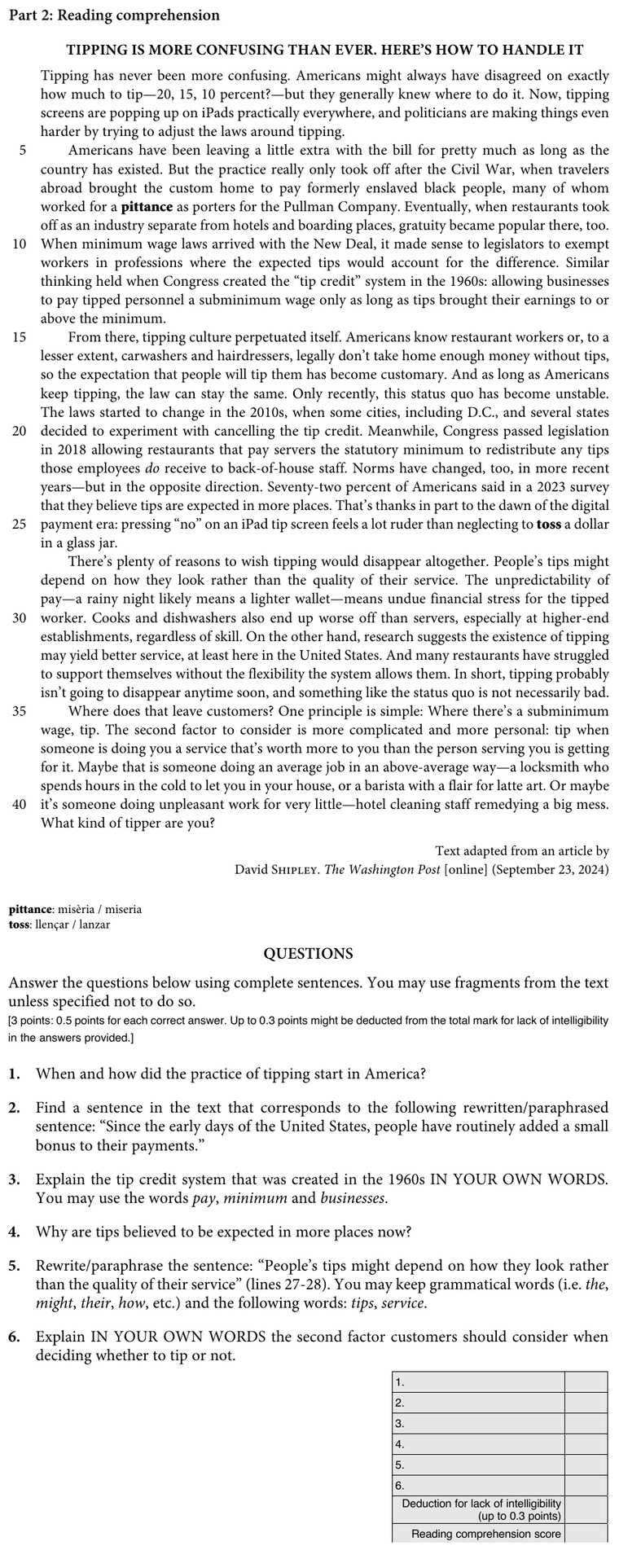
TIPPING IS MORE CONFUSING THAN EVER. HERE’S HOW TO HANDLE IT Tipping has never been more confusing. Americans might always have disagreed on exactly how much to tip—20, 15, 10 percent?—but they generally knew where to do it. Now, tipping screens are popping up on iPads practically everywhere, and politicians are making things even harder by trying to adjust the laws around tipping. Americans have been leaving a little extra with the bill for pretty much as long as the country has existed. But the practice really only took off after the Civil War, when travelers abroad brought the custom home to pay formerly enslaved black people, many of whom worked for a pittance as porters for the Pullman Company. Eventually, when restaurants took off as an industry separate from hotels and boarding places, gratuity became popular there, too. When minimum wage laws arrived with the New Deal, it made sense to legislators to exempt workers in professions where the expected tips would account for the difference. Similar thinking held when Congress created the “tip credit” system in the 1960s: allowing businesses to pay tipped personnel a subminimum wage only as long as tips brought their earnings to or above the minimum. From there, tipping culture perpetuated itself. Americans know restaurant workers or, to a lesser extent, carwashers and hairdressers, legally don’t take home enough money without tips, so the expectation that people will tip them has become customary. And as long as Americans keep tipping, the law can stay the same. Only recently, this status quo has become unstable. The laws started to change in the 2010s, when some cities, including D.C., and several states decided to experiment with cancelling the tip credit. Meanwhile, Congress passed legislation in 2018 allowing restaurants that pay servers the statutory minimum to redistribute any tips those employees do receive to back-of-house staff. Norms have changed, too, in more recent years—but in the opposite direction. Seventy-two percent of Americans said in a 2023 survey that they believe tips are expected in more places. That’s thanks in part to the dawn of the digital payment era: pressing “no” on an iPad tip screen feels a lot ruder than neglecting to toss a dollar in a glass jar. There’s plenty of reasons to wish tipping would disappear altogether. People’s tips might depend on how they look rather than the quality of their service. The unpredictability of pay—a rainy night likely means a lighter wallet—means undue financial stress for the tipped worker. Cooks and dishwashers also end up worse off than servers, especially at higher-end establishments, regardless of skill. On the other hand, research suggests the existence of tipping may yield better service, at least here in the United States. And many restaurants have struggled to support themselves without the flexibility the system allows them. In short, tipping probably isn’t going to disappear anytime soon, and something like the status quo is not necessarily bad. Where does that leave customers? One principle is simple: Where there’s a subminimum wage, tip. The second factor to consider is more complicated and more personal: tip when someone is doing you a service that’s worth more to you than the person serving you is getting for it. Maybe that is someone doing an average job in an above-average way—a locksmith who spends hours in the cold to let you in your house, or a barista with a flair for latte art. Or maybe it’s someone doing unpleasant work for very little—hotel cleaning staff remedying a big mess. What kind of tipper are you? Text adapted from an article by David Shipley. The Washington Post [online] (September 23, 2024)
pittance: misèria / miseria toss: llençar / lanzar
See the shared reading text and glossary in Part 2, question 1 (item 2.1).
When and how did the practice of tipping start in America?
Find a sentence in the text that corresponds to the following rewritten/paraphrased sentence: “Since the early days of the United States, people have routinely added a small bonus to their payments.”
Explain the tip credit system that was created in the 1960s IN YOUR OWN WORDS. You may use the words pay, minimum and businesses.
Why are tips believed to be expected in more places now?
Rewrite/paraphrase the sentence: “People’s tips might depend on how they look rather than the quality of their service” (lines 27-28). You may keep grammatical words (i.e. the, might, their, how, etc.) and the following words: tips, service.
Explain IN YOUR OWN WORDS the second factor customers should consider when deciding whether to tip or not.
La resposta ha d’explicar quan es va estendre el costum i qui el va difondre. Al segon paràgraf, l’expressió took off indica el moment en què es va popularitzar.
The practice became widespread after the Civil War, when travellers brought it back from abroad and used it to pay formerly enslaved Black workers, including Pullman porters.
+0,5criteri 1 de la pauta- Nota d’OriginalLa pauta oficial situa l’inici del costum després de la Guerra de Secessió. El passatge diu que ja es deixaven propines gairebé des dels inicis dels Estats Units i situa la popularització del costum després de la guerra.
 Toca per ampliar
- 0,5 pResposta admesa, sense desglossament de punts dins la pregunta: The practice of tipping started in America after the Civil War and it was brought by travellers who used to pay formerly enslaved black people, many of whom worked for a pittance as porters for the Pullman Company.
Copia la frase exacta de les línies 5–6. A little extra with the bill correspon a «a small bonus to their payments» i for pretty much as long as the country has existed situa el costum als inicis del país.
Americans have been leaving a little extra with the bill for pretty much as long as the country has existed.
+0,5criteri 1 de la pauta
Toca per ampliar- 0,5 pResposta admesa, sense desglossament de punts dins la pregunta: Americans have been leaving a little extra with the bill for pretty much as long as the country has existed (lines 5-6).
Explica amb paraules teves quant podia pagar l’empresa amb la regla dels anys seixanta i quin mínim havien d’assolir els ingressos del treballador un cop sumades les propines.
Under this arrangement, businesses could pay staff less than the legal minimum only if gratuities raised their total income to that level or higher.
+0,5criteri 1 de la pauta
Toca per ampliar- 0,5 pResposta admesa, sense desglossament de punts dins la pregunta: The tip credit system permitted businesses to pay their staff less than required if tipping increased their salaries to the minimum or more.
Busca quina pressió afegeixen les pantalles de pagament. El text compara prémer «no» davant d’una petició directa amb passar de llarg d’un pot de propines.
Digital payment screens now request tips in more places, and customers feel that refusing on a screen is ruder than leaving nothing in a tip jar.
+0,5criteri 1 de la pauta
Toca per ampliar- 0,5 pResposta admesa, sense desglossament de punts dins la pregunta: Tips are believed to be expected in more places because we are in the digital era and pressing “no” on a screen feels ruder than not leaving any dollars in a jar/neglecting to toss a dollar in a glass jar.
Canvia la formulació però conserva el contrast entre l’aparença i com s’atén el client, amb el matís de possibilitat de might. Pots mantenir els mots gramaticals, a més de tips i service.
The tips workers receive might reflect their appearance instead of how good their service is.
La paràfrasi completa val 0,5 punts si només conserva mots permesos. Si la paràfrasi és parcial o conserva un o dos mots no permesos, val 0,25 punts. Una paràfrasi incorrecta o que conserva més de dos mots no permesos val 0 punts.
+0,5criteri 1 de la pauta
Toca per ampliar- 0,5 pResposta admesa, sense desglossament de punts dins la pregunta: The tips workers get/receive might be determined by/might be related to their appearance rather than/and not by/to how well they treat you/how good the service was. (among others) Ampliació oficial publicada el 2027 (bandes alternatives, no acumulables): 0.5: paràfrasi correcta sense mots no permesos. 0.25: paràfrasi correcta que reutilitza un o dos mots no permesos del text i/o paràfrasi parcialment correcta. 0: paràfrasi correcta que reutilitza més de dos mots no permesos i/o paràfrasi incorrecta.Penalització: La pregunta queda en 0.25 punts si es reutilitzen un o dos mots no permesos i/o la paràfrasi és parcialment correcta; queda en 0 si es reutilitzen més de dos mots no permesos i/o és incorrecta. No és una deducció addicional per cada error.Nota de la pauta: Exemples oficials de 0.25: «Workers’ tips depend on their looks rather than the service quality.»; «The appearance of the workers is related to the service and the tips.» Exemples oficials de 0: «People’s tips depend on their looks rather than the service quality.»; «The service depends on the look and the quality of the tips.»
Compara el valor que el client dona a l’ajuda amb la quantitat que cobra qui la presta.
Customers should decide whether the value they place on the help they receive exceeds the worker’s payment for providing it.
La comparació completa, expressada amb paraules pròpies, val 0,5 punts. Una resposta parcial, incompleta, amb informació sobrera o amb un o dos mots no permesos del passatge val 0,25 punts. Una resposta incorrecta o que conserva més de dos mots no permesos val 0 punts.
+0,5criteri 1 de la pauta
Toca per ampliar- 0,5 pResposta admesa, sense desglossament de punts dins la pregunta: The second factor we should consider when tipping is whether the service you receive/are provided with/get is better/of higher quality/more valuable than the money the person doing it is receiving. Ampliació oficial publicada el 2027 (bandes alternatives, no acumulables): 0.5: resposta correcta amb tota la informació rellevant, sense reutilitzar mots no permesos. 0.25: resposta parcialment correcta, informació rellevant incompleta o informació sobrera i/o reutilització d’un o dos mots no permesos del text. 0: resposta incorrecta i/o reutilització de més de dos mots no permesos.Penalització: 0.25 punts en total si la resposta és parcial, incompleta, té informació sobrera i/o reutilitza un o dos mots no permesos; 0 si és incorrecta i/o reutilitza més de dos mots no permesos.Nota de la pauta: Exemples oficials de 0.25: «The second factor is a more valuable service.»; «The second factor is if the service is worth more than the salary.» Exemple oficial de 0: «The second factor is if you like the person serving you more than the service.»