PAU 2026
 Toca per ampliar
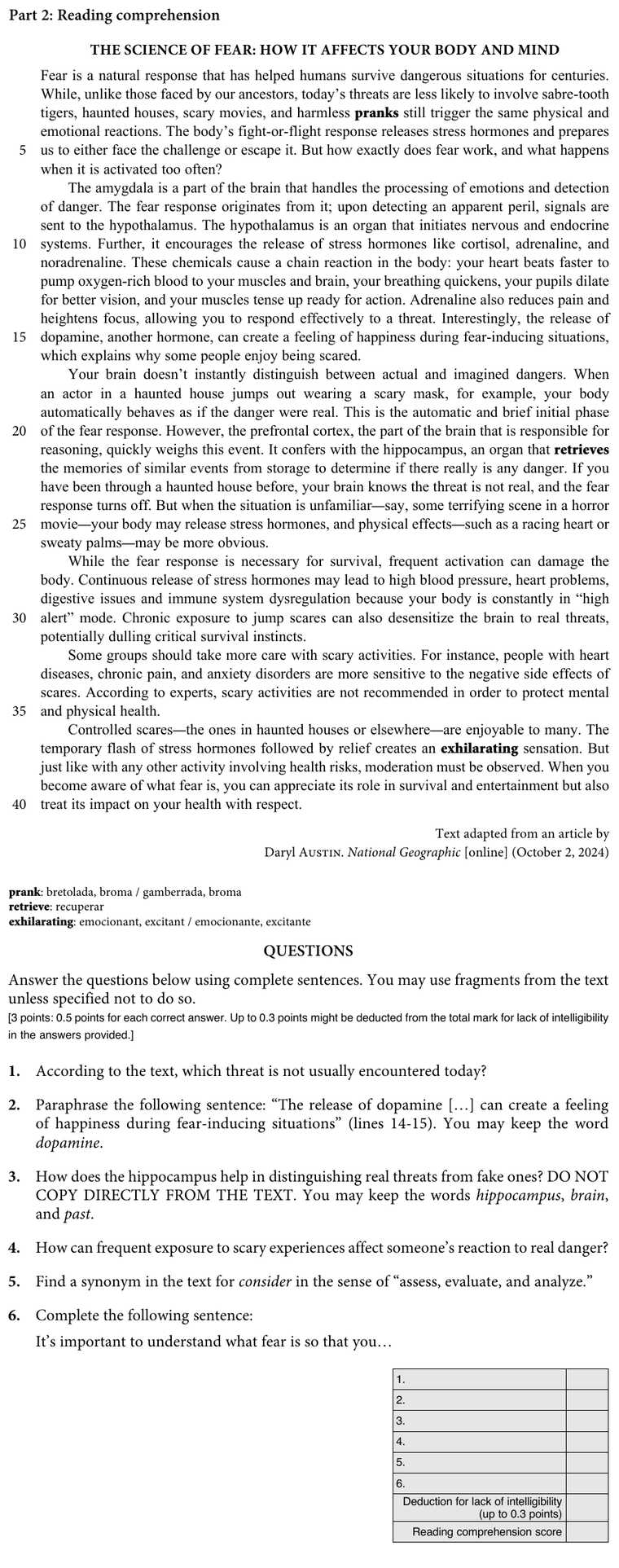
THE SCIENCE OF FEAR: HOW IT AFFECTS YOUR BODY AND MIND Fear is a natural response that has helped humans survive dangerous situations for centuries. While, unlike those faced by our ancestors, today’s threats are less likely to involve sabre-tooth tigers, haunted houses, scary movies, and harmless pranks still trigger the same physical and emotional reactions. The body’s fight-or-flight response releases stress hormones and prepares us to either face the challenge or escape it. But how exactly does fear work, and what happens when it is activated too often? The amygdala is a part of the brain that handles the processing of emotions and detection of danger. The fear response originates from it; upon detecting an apparent peril, signals are sent to the hypothalamus. The hypothalamus is an organ that initiates nervous and endocrine systems. Further, it encourages the release of stress hormones like cortisol, adrenaline, and noradrenaline. These chemicals cause a chain reaction in the body: your heart beats faster to pump oxygen-rich blood to your muscles and brain, your breathing quickens, your pupils dilate for better vision, and your muscles tense up ready for action. Adrenaline also reduces pain and heightens focus, allowing you to respond effectively to a threat. Interestingly, the release of dopamine, another hormone, can create a feeling of happiness during fear-inducing situations, which explains why some people enjoy being scared. Your brain doesn’t instantly distinguish between actual and imagined dangers. When an actor in a haunted house jumps out wearing a scary mask, for example, your body automatically behaves as if the danger were real. This is the automatic and brief initial phase of the fear response. However, the prefrontal cortex, the part of the brain that is responsible for reasoning, quickly weighs this event. It confers with the hippocampus, an organ that retrieves the memories of similar events from storage to determine if there really is any danger. If you have been through a haunted house before, your brain knows the threat is not real, and the fear response turns off. But when the situation is unfamiliar—say, some terrifying scene in a horror movie—your body may release stress hormones, and physical effects—such as a racing heart or sweaty palms—may be more obvious. While the fear response is necessary for survival, frequent activation can damage the body. Continuous release of stress hormones may lead to high blood pressure, heart problems, digestive issues and immune system dysregulation because your body is constantly in “high alert” mode. Chronic exposure to jump scares can also desensitize the brain to real threats, potentially dulling critical survival instincts. Some groups should take more care with scary activities. For instance, people with heart diseases, chronic pain, and anxiety disorders are more sensitive to the negative side effects of scares. According to experts, scary activities are not recommended in order to protect mental and physical health. Controlled scares—the ones in haunted houses or elsewhere—are enjoyable to many. The temporary flash of stress hormones followed by relief creates an exhilarating sensation. But just like with any other activity involving health risks, moderation must be observed. When you become aware of what fear is, you can appreciate its role in survival and entertainment but also treat its impact on your health with respect. Text adapted from an article by Daryl Austin. National Geographic [online] (October 2, 2024)
prank: bretolada, broma / gamberrada, broma retrieve: recuperar exhilarating: emocionant, excitant / emocionante, excitante
See the shared reading text and glossary in Part 2, question 1 (item 2.1).
According to the text, which threat is not usually encountered today?
Paraphrase the following sentence: “The release of dopamine […] can create a feeling of happiness during fear-inducing situations” (lines 14-15). You may keep the word dopamine.
How does the hippocampus help in distinguishing real threats from fake ones? DO NOT COPY DIRECTLY FROM THE TEXT. You may keep the words hippocampus, brain, and past.
How can frequent exposure to scary experiences affect someone’s reaction to real danger?
Find a synonym in the text for consider in the sense of “assess, evaluate, and analyze.”
Complete the following sentence: It’s important to understand what fear is so that you…
Busca al primer paràgraf el perill que l’autor associa amb els nostres avantpassats.
People do not usually encounter sabre-tooth tigers today.
+0,5criteri 1 de la pauta
 Toca per ampliar
- 0,5 pResposta admesa, sense desglossament de punts dins la pregunta: Sabre-tooth tigers are not usually encountered anymore.
Reformula la relació entre la dopamina i el plaer en un moment que fa por.
Conserva «dopamine» i expressa la possibilitat amb «may». «When dopamine is secreted» manté la idea que la dopamina s’allibera.
When dopamine is secreted, we may feel pleasure even in a scary moment.
+0,5criteri 1 de la pauta- Nota d’OriginalSegons la guia d’exemples, una paràfrasi correcta amb un o dos mots no permesos, o una de parcialment correcta, val 0,25 punts. Amb més de dos mots no permesos o una resposta incorrecta, la puntuació és 0.
Toca per ampliar- 0,5 pResposta admesa, sense desglossament de punts dins la pregunta: The production of dopamine can cause a sense of joy/satisfaction/bliss when experiencing/during/in frightening moments/events. (among others) Ampliació oficial publicada el 2027 (bandes alternatives, no acumulables): 0.5: paràfrasi correcta sense mots no permesos. 0.25: paràfrasi correcta que reutilitza un o dos mots no permesos del text i/o paràfrasi parcialment correcta. 0: paràfrasi correcta que reutilitza més de dos mots no permesos i/o paràfrasi incorrecta.Penalització: La pregunta queda en 0.25 punts si es reutilitzen un o dos mots no permesos i/o la paràfrasi és parcialment correcta; queda en 0 si es reutilitzen més de dos mots no permesos i/o és incorrecta. No és una deducció addicional per cada error.Nota de la pauta: Exemples oficials de 0.25: «The production of dopamine can create a feeling of satisfaction during afraid moments» (la guia avisa que «afraid» és incorrecte aquí, però es capta el significat); «The dopamine can create a feeling of satisfaction.» Exemples oficials de 0: «The production of dopamine can create a feeling of happiness during afraid moments» (mateix avís sobre «afraid»); «Dopamine creates frightening moments.»
Explica amb paraules teves com l’hipocamp ajuda a valorar un possible perill.
El cervell es guia pel que ens ha passat abans. L’exemple de la casa encantada mostra com una experiència prèvia ens ajuda a entendre que l’ensurt està preparat.
The hippocampus calls up past experiences that resemble what is happening now, so the brain can judge if the risk is genuine.
+0,5criteri 1 de la pauta
Toca per ampliar- 0,5 pResposta admesa, sense desglossament de punts dins la pregunta: The hippocampus recalls familiar past events/thoughts/actions to aid the brain know whether the present danger is true or unreal. (among others)
Relaciona els ensurts repetits amb la intensitat de la resposta davant d’un perill real.
Esmenta tant el canvi en la sensibilitat del cervell com la conseqüència que té quan hi ha una amenaça real.
Repeated frightening experiences can desensitize the brain, making it respond less strongly to genuine danger.
+0,5criteri 1 de la pauta- Nota d’OriginalSegons la guia d’exemples, dir només que el cervell es desensibilitza val 0,25 punts. Per obtenir el mig punt, explica com això afebleix la reacció davant del perill real i limita’t a aquesta relació.
Toca per ampliar- 0,5 pResposta admesa, sense desglossament de punts dins la pregunta: Frequent exposure to scary experiences can desensitize the brain, reducing its ability to react strongly to real threats. Ampliació oficial publicada el 2027 (bandes alternatives, no acumulables): 0.5: resposta correcta amb tota la informació rellevant: la desensibilització del cervell redueix la capacitat de reaccionar intensament a perills reals; s’accepta «scary experiences/jump scares». 0.25: resposta parcialment correcta, incompleta o amb més informació de la necessària. 0: resposta incorrecta.Penalització: 0.25 punts en total si la resposta és parcial, incompleta o conté més informació de la necessària; 0 si és incorrecta.Nota de la pauta: Exemples oficials de 0.25: «Frequent exposure to jump scares/scary experiences can desensitize the brain.»; «Frequent exposure to jump scares/scary experiences is dangerous for real threats.» Exemple oficial de 0: «Frequent exposure to scary experiences is necessary for survival/is good for mental health, etc.»
Localitza el verb que descriu com el còrtex prefrontal avalua un possible perill.
Al tercer paràgraf, «quickly weighs this event» vol dir que el còrtex valora el que acaba de passar.
The synonym is weighs.
+0,5criteri 1 de la pauta
Toca per ampliar- 0,5 pResposta admesa, sense desglossament de punts dins la pregunta: weigh(s) (line 20)
Completa la frase amb les dues idees amb què l’autor tanca el text.
Entendre la por ens permet valorar-ne la funció en la supervivència i l’entreteniment i prendre seriosament els efectes sobre la salut.
It’s important to understand what fear is so that you can appreciate its role in survival and entertainment but also treat its impact on your health with respect.
+0,5criteri 1 de la pauta
Toca per ampliar- 0,5 pResposta admesa, sense desglossament de punts dins la pregunta: It’s important to understand what fear is so that you… can appreciate its role in survival and entertainment but also treat its impact on your health with respect.