PAU 2022
 Toca per ampliar
GINKGO TREES NEARLY WENT EXTINCT. HERE’S HOW WE SAVED THESE ‘LIVING FOSSILS’
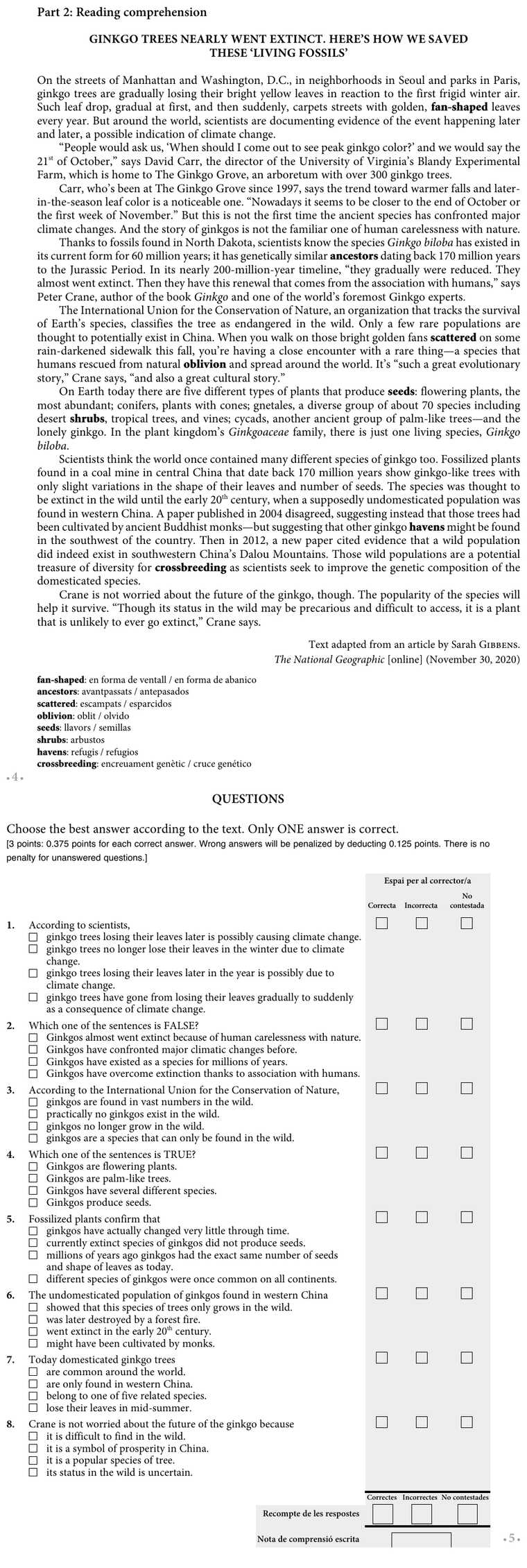
On the streets of Manhattan and Washington, D.C., in neighborhoods in Seoul and parks in Paris, ginkgo trees are gradually losing their bright yellow leaves in reaction to the first frigid winter air. Such leaf drop, gradual at first, and then suddenly, carpets streets with golden, fan-shaped leaves every year. But around the world, scientists are documenting evidence of the event happening later and later, a possible indication of climate change. “People would ask us, ‘When should I come out to see peak ginkgo color?’ and we would say the 21st of October,” says David Carr, the director of the University of Virginia’s Blandy Experimental Farm, which is home to The Ginkgo Grove, an arboretum with over 300 ginkgo trees. Carr, who’s been at The Ginkgo Grove since 1997, says the trend toward warmer falls and later-in-the-season leaf color is a noticeable one. “Nowadays it seems to be closer to the end of October or the first week of November.” But this is not the first time the ancient species has confronted major climate changes. And the story of ginkgos is not the familiar one of human carelessness with nature. Thanks to fossils found in North Dakota, scientists know the species Ginkgo biloba has existed in its current form for 60 million years; it has genetically similar ancestors dating back 170 million years to the Jurassic Period. In its nearly 200-million-year timeline, “they gradually were reduced. They almost went extinct. Then they have this renewal that comes from the association with humans,” says Peter Crane, author of the book Ginkgo and one of the world’s foremost Ginkgo experts. The International Union for the Conservation of Nature, an organization that tracks the survival of Earth’s species, classifies the tree as endangered in the wild. Only a few rare populations are thought to potentially exist in China. When you walk on those bright golden fans scattered on some rain-darkened sidewalk this fall, you’re having a close encounter with a rare thing—a species that humans rescued from natural oblivion and spread around the world. It’s “such a great evolutionary story,” Crane says, “and also a great cultural story.” On Earth today there are five different types of plants that produce seeds: flowering plants, the most abundant; conifers, plants with cones; gnetales, a diverse group of about 70 species including desert shrubs, tropical trees, and vines; cycads, another ancient group of palm-like trees—and the lonely ginkgo. In the plant kingdom’s Ginkgoaceae family, there is just one living species, Ginkgo biloba. Scientists think the world once contained many different species of ginkgo too. Fossilized plants found in a coal mine in central China that date back 170 million years show ginkgo-like trees with only slight variations in the shape of their leaves and number of seeds. The species was thought to be extinct in the wild until the early 20th century, when a supposedly undomesticated population was found in western China. A paper published in 2004 disagreed, suggesting instead that those trees had been cultivated by ancient Buddhist monks—but suggesting that other ginkgo havens might be found in the southwest of the country. Then in 2012, a new paper cited evidence that a wild population did indeed exist in southwestern China’s Dalou Mountains. Those wild populations are a potential treasure of diversity for crossbreeding as scientists seek to improve the genetic composition of the domesticated species. Crane is not worried about the future of the ginkgo, though. The popularity of the species will help it survive. “Though its status in the wild may be precarious and difficult to access, it is a plant that is unlikely to ever go extinct,” Crane says. Text adapted from an article by Sarah Gibbens. The National Geographic [online] (November 30, 2020) fan-shaped: en forma de ventall / en forma de abanico ancestors: avantpassats / antepasados scattered: escampats / esparcidos oblivion: oblit / olvido seeds: llavors / semillas shrubs: arbustos havens: refugis / refugios crossbreeding: encreuament genètic / cruce genético
See the shared reading text and glossary in Part 2, question 1 (item 2.1).
According to scientists,
ginkgo trees losing their leaves later is possibly causing climate change.
ginkgo trees no longer lose their leaves in the winter due to climate
change.
ginkgo trees losing their leaves later in the year is possibly due to
climate change.
ginkgo trees have gone from losing their leaves gradually to suddenly
as a consequence of climate change.
Which one of the sentences is FALSE?
Ginkgos almost went extinct because of human carelessness with nature.
Ginkgos have confronted major climatic changes before.
Ginkgos have existed as a species for millions of years.
Ginkgos have overcome extinction thanks to association with humans.
According to the International Union for the Conservation of Nature,
ginkgos are found in vast numbers in the wild.
practically no ginkgos exist in the wild.
ginkgos no longer grow in the wild.
ginkgos are a species that can only be found in the wild.
Which one of the sentences is TRUE?
Ginkgos are flowering plants.
Ginkgos are palm-like trees.
Ginkgos have several different species.
Ginkgos produce seeds.
Fossilized plants confirm that
ginkgos have actually changed very little through time.
currently extinct species of ginkgos did not produce seeds.
millions of years ago ginkgos had the exact same number of seeds
and shape of leaves as today.
different species of ginkgos were once common on all continents.
The undomesticated population of ginkgos found in western China
showed that this species of trees only grows in the wild.
was later destroyed by a forest fire.
went extinct in the early 20th century.
might have been cultivated by monks.
Today domesticated ginkgo trees
are common around the world.
are only found in western China.
belong to one of five related species.
lose their leaves in mid-summer.
Crane is not worried about the future of the ginkgo because
it is difficult to find in the wild.
it is a symbol of prosperity in China.
it is a popular species of tree.
its status in the wild is uncertain.
 Toca per ampliar
- 0,375 pSeleccionar la resposta de la clau oficial: ginkgo trees losing their leaves later in the year is possibly due to climate change.Penalització: Resposta incorrecta: −0.125 punts; pregunta no contestada: sense penalització.
Toca per ampliar- 0,375 pSeleccionar la resposta de la clau oficial: ginkgos almost went extinct because of human carelessness with nature.Penalització: Resposta incorrecta: −0.125 punts; pregunta no contestada: sense penalització.
Toca per ampliar- 0,375 pSeleccionar la resposta de la clau oficial: practically no ginkgos exist in the wild.Penalització: Resposta incorrecta: −0.125 punts; pregunta no contestada: sense penalització.
Toca per ampliar- 0,375 pSeleccionar la resposta de la clau oficial: ginkgos produce seeds.Penalització: Resposta incorrecta: −0.125 punts; pregunta no contestada: sense penalització.
Toca per ampliar- 0,375 pSeleccionar la resposta de la clau oficial: ginkgos have actually changed very little through time.Penalització: Resposta incorrecta: −0.125 punts; pregunta no contestada: sense penalització.
Toca per ampliar- 0,375 pSeleccionar la resposta de la clau oficial: might have been cultivated by monks.Penalització: Resposta incorrecta: −0.125 punts; pregunta no contestada: sense penalització.
Toca per ampliar- 0,375 pSeleccionar la resposta de la clau oficial: are common around the world.Penalització: Resposta incorrecta: −0.125 punts; pregunta no contestada: sense penalització.
Toca per ampliar- 0,375 pSeleccionar la resposta de la clau oficial: it is a popular species of tree.Penalització: Resposta incorrecta: −0.125 punts; pregunta no contestada: sense penalització.