PAU 2024
 Toca per ampliar
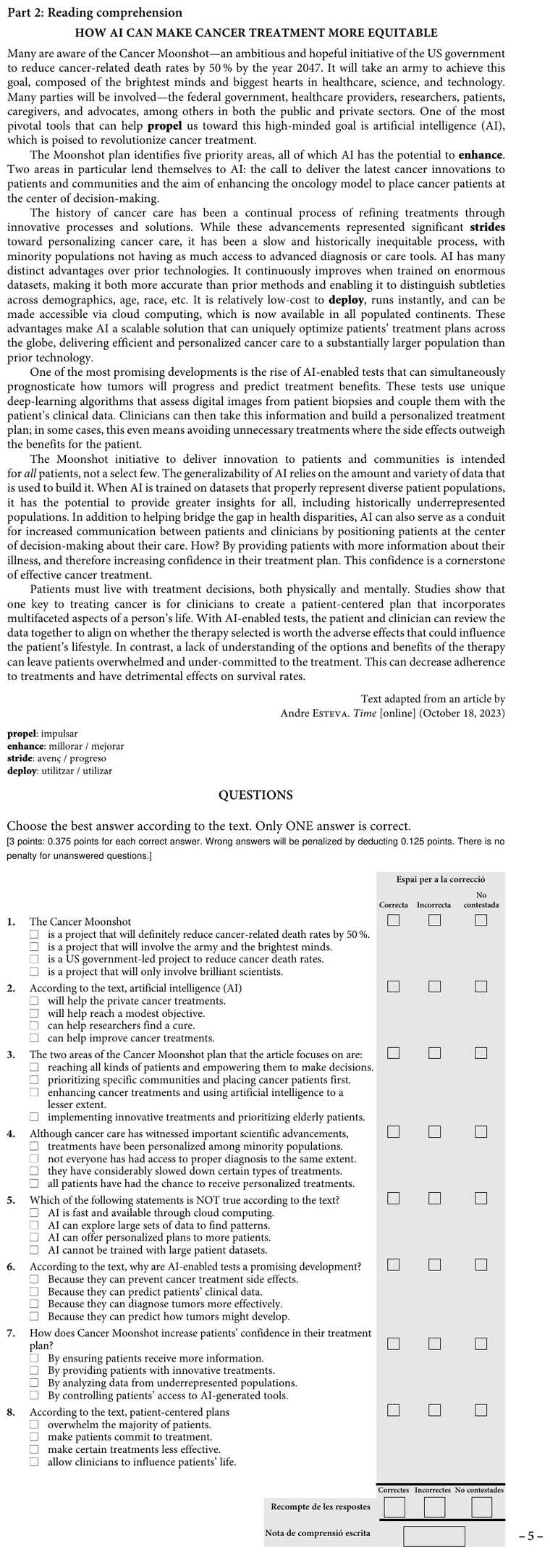
HOW AI CAN MAKE CANCER TREATMENT MORE EQUITABLE Many are aware of the Cancer Moonshot—an ambitious and hopeful initiative of the US government to reduce cancer-related death rates by 50 % by the year 2047. It will take an army to achieve this goal, composed of the brightest minds and biggest hearts in healthcare, science, and technology. Many parties will be involved—the federal government, healthcare providers, researchers, patients, caregivers, and advocates, among others in both the public and private sectors. One of the most pivotal tools that can help propel us toward this high-minded goal is artificial intelligence (AI), which is poised to revolutionize cancer treatment. The Moonshot plan identifies five priority areas, all of which AI has the potential to enhance. Two areas in particular lend themselves to AI: the call to deliver the latest cancer innovations to patients and communities and the aim of enhancing the oncology model to place cancer patients at the center of decision-making. The history of cancer care has been a continual process of refining treatments through innovative processes and solutions. While these advancements represented significant strides toward personalizing cancer care, it has been a slow and historically inequitable process, with minority populations not having as much access to advanced diagnosis or care tools. AI has many distinct advantages over prior technologies. It continuously improves when trained on enormous datasets, making it both more accurate than prior methods and enabling it to distinguish subtleties across demographics, age, race, etc. It is relatively low-cost to deploy, runs instantly, and can be made accessible via cloud computing, which is now available in all populated continents. These advantages make AI a scalable solution that can uniquely optimize patients’ treatment plans across the globe, delivering efficient and personalized cancer care to a substantially larger population than prior technology. One of the most promising developments is the rise of AI-enabled tests that can simultaneously prognosticate how tumors will progress and predict treatment benefits. These tests use unique deep-learning algorithms that assess digital images from patient biopsies and couple them with the patient’s clinical data. Clinicians can then take this information and build a personalized treatment plan; in some cases, this even means avoiding unnecessary treatments where the side effects outweigh the benefits for the patient. The Moonshot initiative to deliver innovation to patients and communities is intended for all patients, not a select few. The generalizability of AI relies on the amount and variety of data that is used to build it. When AI is trained on datasets that properly represent diverse patient populations, it has the potential to provide greater insights for all, including historically underrepresented populations. In addition to helping bridge the gap in health disparities, AI can also serve as a conduit for increased communication between patients and clinicians by positioning patients at the center of decision-making about their care. How? By providing patients with more information about their illness, and therefore increasing confidence in their treatment plan. This confidence is a cornerstone of effective cancer treatment. Patients must live with treatment decisions, both physically and mentally. Studies show that one key to treating cancer is for clinicians to create a patient-centered plan that incorporates multifaceted aspects of a person’s life. With AI-enabled tests, the patient and clinician can review the data together to align on whether the therapy selected is worth the adverse effects that could influence the patient’s lifestyle. In contrast, a lack of understanding of the options and benefits of the therapy can leave patients overwhelmed and under-committed to the treatment. This can decrease adherence to treatments and have detrimental effects on survival rates. Text adapted from an article by Andre Esteva. Time [online] (October 18, 2023) propel: impulsar enhance: millorar / mejorar stride: avenç / progreso deploy: utilitzar / utilizar
See the shared reading text and glossary in Part 2, question 1 (item 2.1).
The Cancer Moonshot
■ is a project that will definitely reduce cancer-related death rates by 50 %.
■ is a project that will involve the army and the brightest minds.
■ is a US government-led project to reduce cancer death rates.
■ is a project that will only involve brilliant scientists.
According to the text, artificial intelligence (AI)
■ will help the private cancer treatments.
■ will help reach a modest objective.
■ can help researchers find a cure.
■ can help improve cancer treatments.
The two areas of the Cancer Moonshot plan that the article focuses on are:
■ reaching all kinds of patients and empowering them to make decisions.
■ prioritizing specific communities and placing cancer patients first.
■ enhancing cancer treatments and using artificial intelligence to a
lesser extent.
■ implementing innovative treatments and prioritizing elderly patients.
Although cancer care has witnessed important scientific advancements,
■ treatments have been personalized among minority populations.
■ not everyone has had access to proper diagnosis to the same extent.
■ they have considerably slowed down certain types of treatments.
■ all patients have had the chance to receive personalized treatments.
Which of the following statements is NOT true according to the text?
■ AI is fast and available through cloud computing.
■ AI can explore large sets of data to find patterns.
■ AI can offer personalized plans to more patients.
■ AI cannot be trained with large patient datasets.
According to the text, why are AI-enabled tests a promising development?
■ Because they can prevent cancer treatment side effects.
■ Because they can predict patients’ clinical data.
■ Because they can diagnose tumors more effectively.
■ Because they can predict how tumors might develop.
How does Cancer Moonshot increase patients’ confidence in their treatment
plan?
■ By ensuring patients receive more information.
■ By providing patients with innovative treatments.
■ By analyzing data from underrepresented populations.
■ By controlling patients’ access to AI-generated tools.
According to the text, patient-centered plans
■ overwhelm the majority of patients.
■ make patients commit to treatment.
■ make certain treatments less effective.
■ allow clinicians to influence patients’ life.
El primer paràgraf identifica qui impulsa el projecte i amb quin objectiu. Reduir la mortalitat per càncer a la meitat per al 2047 és la fita que es proposa el govern dels Estats Units.
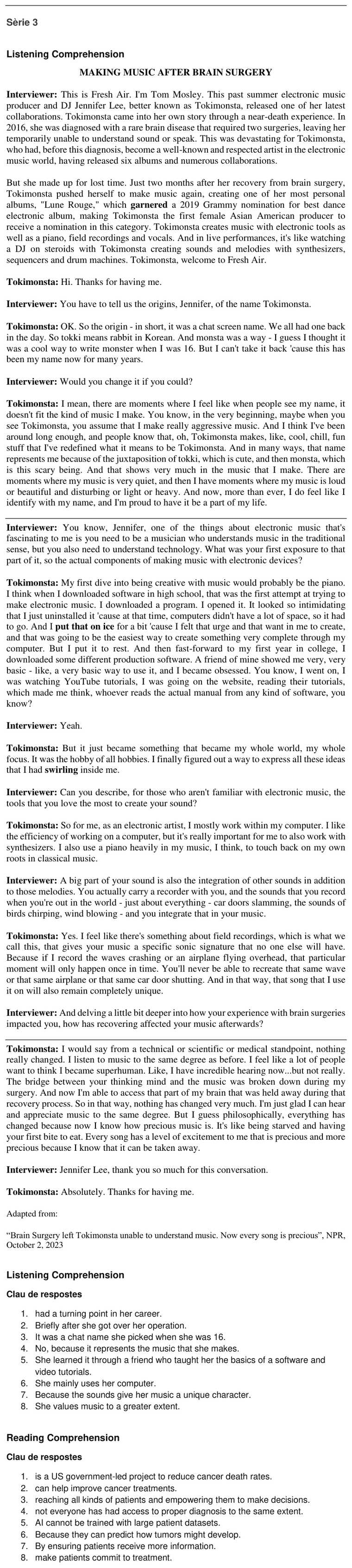
is a US government-led project to reduce cancer death rates.
+0,375criteri 1 de la pauta
 Toca per ampliar
- 0,375 pSeleccionar la resposta de la clau oficial: is a US government-led project to reduce cancer death rates.Penalització: Resposta incorrecta: −0.125 punts; pregunta no contestada: sense penalització.
El text presenta la IA com una eina per millorar l’atenció oncològica. Un exemple concret és l’ús de prediccions per triar un tractament més adequat a cada pacient.
can help improve cancer treatments.
+0,375criteri 1 de la pauta
Toca per ampliar- 0,375 pSeleccionar la resposta de la clau oficial: can help improve cancer treatments.Penalització: Resposta incorrecta: −0.125 punts; pregunta no contestada: sense penalització.
El segon paràgraf destaca dues prioritats del pla. Una és fer arribar les innovacions oncològiques a pacients i comunitats diversos i l’altra és donar als pacients un paper central en les decisions sobre la seva atenció.
reaching all kinds of patients and empowering them to make decisions.
+0,375criteri 1 de la pauta
Toca per ampliar- 0,375 pSeleccionar la resposta de la clau oficial: reaching all kinds of patients and empowering them to make decisions.Penalització: Resposta incorrecta: −0.125 punts; pregunta no contestada: sense penalització.
Amb although, l’enunciat demana la dificultat que ha persistit malgrat els avenços. El tercer paràgraf explica que les poblacions minoritàries han tingut menys accés a eines avançades de diagnòstic i d’atenció.
not everyone has had access to proper diagnosis to the same extent.
+0,375criteri 1 de la pauta
Toca per ampliar- 0,375 pSeleccionar la resposta de la clau oficial: not everyone has had access to proper diagnosis to the same extent.Penalització: Resposta incorrecta: −0.125 punts; pregunta no contestada: sense penalització.
El NOT et demana que marquis l’opció falsa. El tercer paràgraf diu que entrenar la IA amb conjunts de dades molt grans li permet millorar, així que l’opció amb cannot contradiu el text.
AI cannot be trained with large patient datasets.
+0,375criteri 1 de la pauta
Toca per ampliar- 0,375 pSeleccionar la resposta de la clau oficial: AI cannot be trained with large patient datasets.Penalització: Resposta incorrecta: −0.125 punts; pregunta no contestada: sense penalització.
El quart paràgraf explica que les proves combinen imatges de biòpsies amb dades clíniques per anticipar l’evolució d’un tumor i estimar els beneficis del tractament.
Because they can predict how tumors might develop.
+0,375criteri 1 de la pauta
Toca per ampliar- 0,375 pSeleccionar la resposta de la clau oficial: Because they can predict how tumors might develop.Penalització: Resposta incorrecta: −0.125 punts; pregunta no contestada: sense penalització.
Cap al final del cinquè paràgraf, el text relaciona la confiança amb allò que sap el pacient. Amb més informació sobre la seva malaltia, pot entendre millor el pla de tractament i participar en les decisions.
By ensuring patients receive more information.
+0,375criteri 1 de la pauta
Toca per ampliar- 0,375 pSeleccionar la resposta de la clau oficial: By ensuring patients receive more information.Penalització: Resposta incorrecta: −0.125 punts; pregunta no contestada: sense penalització.
L’últim paràgraf explica que el pacient i el metge poden valorar junts els beneficis i els efectes adversos. Entendre per què han triat aquell tractament fa més fàcil seguir-lo.
make patients commit to treatment.
+0,375criteri 1 de la pauta
Toca per ampliar- 0,375 pSeleccionar la resposta de la clau oficial: make patients commit to treatment.Penalització: Resposta incorrecta: −0.125 punts; pregunta no contestada: sense penalització.