PAU 2024
 Toca per ampliar
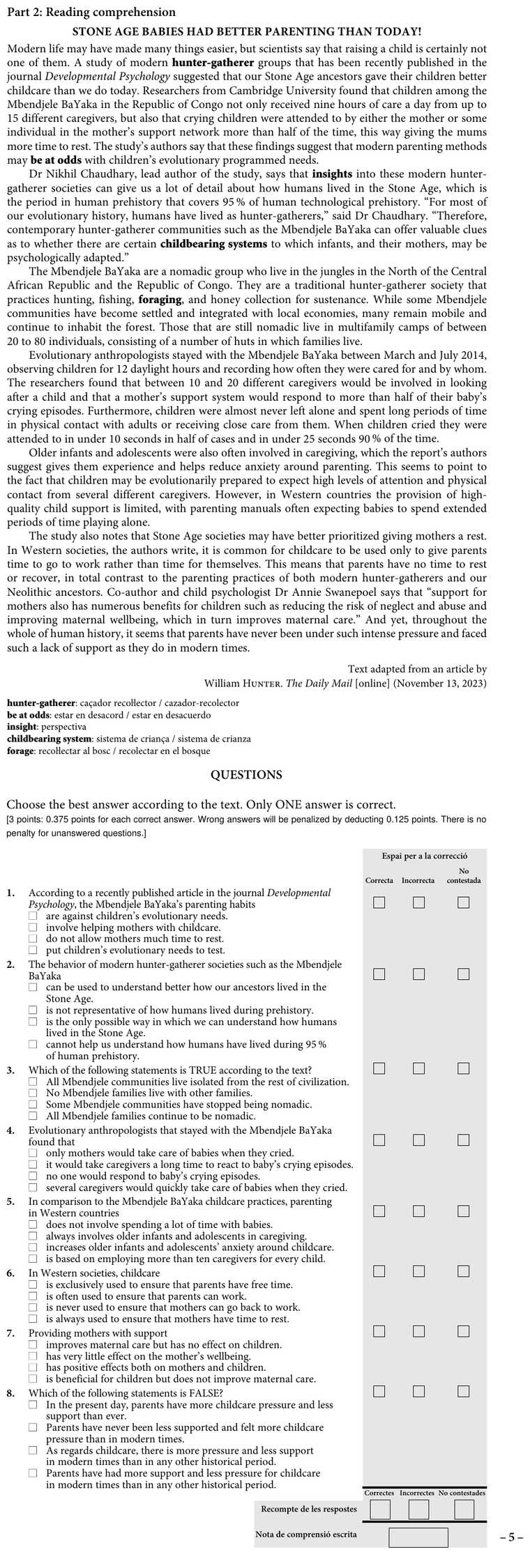
STONE AGE BABIES HAD BETTER PARENTING THAN TODAY! Modern life may have made many things easier, but scientists say that raising a child is certainly not one of them. A study of modern hunter-gatherer groups that has been recently published in the journal Developmental Psychology suggested that our Stone Age ancestors gave their children better childcare than we do today. Researchers from Cambridge University found that children among the Mbendjele BaYaka in the Republic of Congo not only received nine hours of care a day from up to 15 different caregivers, but also that crying children were attended to by either the mother or some individual in the mother’s support network more than half of the time, this way giving the mums more time to rest. The study’s authors say that these findings suggest that modern parenting methods may be at odds with children’s evolutionary programmed needs. Dr Nikhil Chaudhary, lead author of the study, says that insights into these modern hunter-gatherer societies can give us a lot of detail about how humans lived in the Stone Age, which is the period in human prehistory that covers 95 % of human technological prehistory. “For most of our evolutionary history, humans have lived as hunter-gatherers,” said Dr Chaudhary. “Therefore, contemporary hunter-gatherer communities such as the Mbendjele BaYaka can offer valuable clues as to whether there are certain childbearing systems to which infants, and their mothers, may be psychologically adapted.” The Mbendjele BaYaka are a nomadic group who live in the jungles in the North of the Central African Republic and the Republic of Congo. They are a traditional hunter-gatherer society that practices hunting, fishing, foraging, and honey collection for sustenance. While some Mbendjele communities have become settled and integrated with local economies, many remain mobile and continue to inhabit the forest. Those that are still nomadic live in multifamily camps of between 20 to 80 individuals, consisting of a number of huts in which families live. Evolutionary anthropologists stayed with the Mbendjele BaYaka between March and July 2014, observing children for 12 daylight hours and recording how often they were cared for and by whom. The researchers found that between 10 and 20 different caregivers would be involved in looking after a child and that a mother’s support system would respond to more than half of their baby’s crying episodes. Furthermore, children were almost never left alone and spent long periods of time in physical contact with adults or receiving close care from them. When children cried they were attended to in under 10 seconds in half of cases and in under 25 seconds 90 % of the time. Older infants and adolescents were also often involved in caregiving, which the report’s authors suggest gives them experience and helps reduce anxiety around parenting. This seems to point to the fact that children may be evolutionarily prepared to expect high levels of attention and physical contact from several different caregivers. However, in Western countries the provision of high-quality child support is limited, with parenting manuals often expecting babies to spend extended periods of time playing alone. The study also notes that Stone Age societies may have better prioritized giving mothers a rest. In Western societies, the authors write, it is common for childcare to be used only to give parents time to go to work rather than time for themselves. This means that parents have no time to rest or recover, in total contrast to the parenting practices of both modern hunter-gatherers and our Neolithic ancestors. Co-author and child psychologist Dr Annie Swanepoel says that “support for mothers also has numerous benefits for children such as reducing the risk of neglect and abuse and improving maternal wellbeing, which in turn improves maternal care.” And yet, throughout the whole of human history, it seems that parents have never been under such intense pressure and faced such a lack of support as they do in modern times. Text adapted from an article by William Hunter. The Daily Mail [online] (November 13, 2023) hunter-gatherer: caçador recoŀlector / cazador-recolector be at odds: estar en desacord / estar en desacuerdo insight: perspectiva childbearing system: sistema de criança / sistema de crianza forage: recoŀlectar al bosc / recolectar en el bosque
See the shared reading text and glossary in Part 2, question 1 (item 2.1).
According to a recently published article in the journal Developmental
Psychology, the Mbendjele BaYaka’s parenting habits
■ are against children’s evolutionary needs.
■ involve helping mothers with childcare.
■ do not allow mothers much time to rest.
■ put children’s evolutionary needs to test.
The behavior of modern hunter-gatherer societies such as the Mbendjele
BaYaka
■ can be used to understand better how our ancestors lived in the
Stone Age.
■ is not representative of how humans lived during prehistory.
■ is the only possible way in which we can understand how humans
lived in the Stone Age.
■ cannot help us understand how humans have lived during 95 %
of human prehistory.
Which of the following statements is TRUE according to the text?
■ All Mbendjele communities live isolated from the rest of civilization.
■ No Mbendjele families live with other families.
■ Some Mbendjele communities have stopped being nomadic.
■ All Mbendjele families continue to be nomadic.
Evolutionary anthropologists that stayed with the Mbendjele BaYaka
found that
■ only mothers would take care of babies when they cried.
■ it would take caregivers a long time to react to baby’s crying episodes.
■ no one would respond to baby’s crying episodes.
■ several caregivers would quickly take care of babies when they cried.
In comparison to the Mbendjele BaYaka childcare practices, parenting
in Western countries
■ does not involve spending a lot of time with babies.
■ always involves older infants and adolescents in caregiving.
■ increases older infants and adolescents’ anxiety around childcare.
■ is based on employing more than ten caregivers for every child.
In Western societies, childcare
■ is exclusively used to ensure that parents have free time.
■ is often used to ensure that parents can work.
■ is never used to ensure that mothers can go back to work.
■ is always used to ensure that mothers have time to rest.
Providing mothers with support
■ improves maternal care but has no effect on children.
■ has very little effect on the mother’s wellbeing.
■ has positive effects both on mothers and children.
■ is beneficial for children but does not improve maternal care.
Which of the following statements is FALSE?
■ In the present day, parents have more childcare pressure and less
support than ever.
■ Parents have never been less supported and felt more childcare
pressure than in modern times.
■ As regards childcare, there is more pressure and less support
in modern times than in any other historical period.
■ Parents have had more support and less pressure for childcare
in modern times than in any other historical period.
Identifica quin paper té la xarxa de suport de les mares en la cura dels infants.
Entre els Mbendjele BaYaka, diverses persones cuiden els infants. La xarxa de suport també els atén quan ploren, cosa que dona a les mares més temps per descansar.
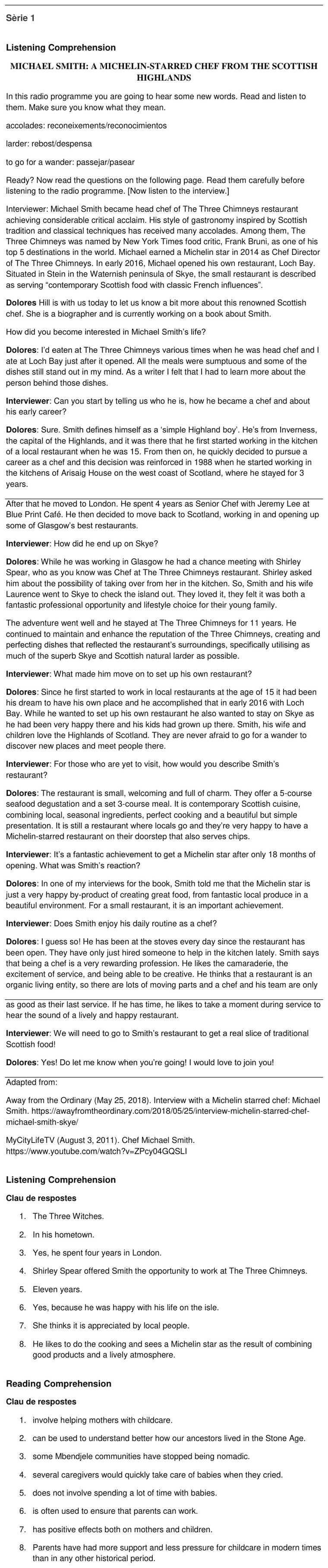
B. involve helping mothers with childcare.
+0,375criteri 1 de la pauta- Nota d’OriginalEn anglès, childbearing es refereix al fet de tenir fills i child-rearing vol dir criar-los. Al passatge, l’expressió «childbearing systems» fa referència als sistemes de criança.
 Toca per ampliar
- 0,375 pSeleccionar la resposta de la clau oficial: involve helping mothers with childcare.Penalització: Resposta incorrecta: −0.125 punts; pregunta no contestada: sense penalització.
Fixa’t en què podem aprendre sobre l’edat de pedra a partir de l’observació de societats caçadores i recol·lectores actuals.
Al segon paràgraf, Chaudhary diu que aquestes comunitats ofereixen pistes sobre com vivien els nostres avantpassats. L’expressió can be used recull aquesta idea de possibilitat.
A. can be used to understand better how our ancestors lived in the Stone Age.
+0,375criteri 1 de la pauta
Toca per ampliar- 0,375 pSeleccionar la resposta de la clau oficial: can be used to understand better how our ancestors lived in the Stone Age.Penalització: Resposta incorrecta: −0.125 punts; pregunta no contestada: sense penalització.
Distingeix some (algunes comunitats) d’all (totes) quan el text parla del nomadisme.
Al tercer paràgraf, have become settled indica que algunes comunitats s’han establert en un lloc fix. El text també diu que moltes continuen desplaçant-se pel bosc.
C. some Mbendjele communities have stopped being nomadic.
+0,375criteri 1 de la pauta
Toca per ampliar- 0,375 pSeleccionar la resposta de la clau oficial: some Mbendjele communities have stopped being nomadic.Penalització: Resposta incorrecta: −0.125 punts; pregunta no contestada: sense penalització.
Busca qui atenia els nadons quan ploraven i amb quina rapidesa ho feia.
L’estudi va observar que diverses persones cuidaven cada infant. La xarxa de suport de la mare responia a més de la meitat dels episodis de plor. En la meitat dels casos, els infants rebien atenció en menys de 10 segons.
D. several caregivers would quickly take care of babies when they cried.
+0,375criteri 1 de la pauta
Toca per ampliar- 0,375 pSeleccionar la resposta de la clau oficial: several caregivers would quickly take care of babies when they cried.Penalització: Resposta incorrecta: −0.125 punts; pregunta no contestada: sense penalització.
Compara el temps de contacte i atenció directa que descriu el text en cada cas.
Els infants mbendjele passaven llargs períodes en contacte amb adults. En el cas occidental, el text parla d’un suport limitat i de manuals que esperen que els nadons passin força estona jugant sols.
A. does not involve spending a lot of time with babies.
+0,375criteri 1 de la pauta
Toca per ampliar- 0,375 pSeleccionar la resposta de la clau oficial: does not involve spending a lot of time with babies.Penalització: Resposta incorrecta: −0.125 punts; pregunta no contestada: sense penalització.
Busca per a què es fan servir habitualment els serveis de cura infantil a les societats occidentals.
El text diu que és habitual recórrer a aquests serveis perquè els pares puguin anar a treballar. L’opció ho expressa amb often.
B. is often used to ensure that parents can work.
+0,375criteri 1 de la pauta
Toca per ampliar- 0,375 pSeleccionar la resposta de la clau oficial: is often used to ensure that parents can work.Penalització: Resposta incorrecta: −0.125 punts; pregunta no contestada: sense penalització.
La pregunta demana reconèixer qui es beneficia del suport que reben les mares.
Segons Annie Swanepoel, el suport millora el benestar de les mares i, amb això, l’atenció que poden donar. També redueix per als infants el risc de desatenció i maltractament.
C. has positive effects both on mothers and children.
+0,375criteri 1 de la pauta
Toca per ampliar- 0,375 pSeleccionar la resposta de la clau oficial: has positive effects both on mothers and children.Penalització: Resposta incorrecta: −0.125 punts; pregunta no contestada: sense penalització.
La paraula FALSE et demana l’afirmació que capgira la conclusió del text.
L’última frase afirma que, avui, els pares tenen més pressió i menys suport que mai. L’opció que parla de more support and less pressure inverteix totes dues idees.
D. Parents have had more support and less pressure for childcare in modern times than in any other historical period.
+0,375criteri 1 de la pauta
Toca per ampliar- 0,375 pSeleccionar la resposta de la clau oficial: Parents have had more support and less pressure for childcare in modern times than in any other historical period.Penalització: Resposta incorrecta: −0.125 punts; pregunta no contestada: sense penalització.